Burgundy vs Plum Brown: Red-Violet or Violet-Brown?
Updated November 2026 3 min read 2 shades compared
Burgundy is the redder, more saturated choice. Plum brown is darker and more brown, with the violet showing mainly in daylight.
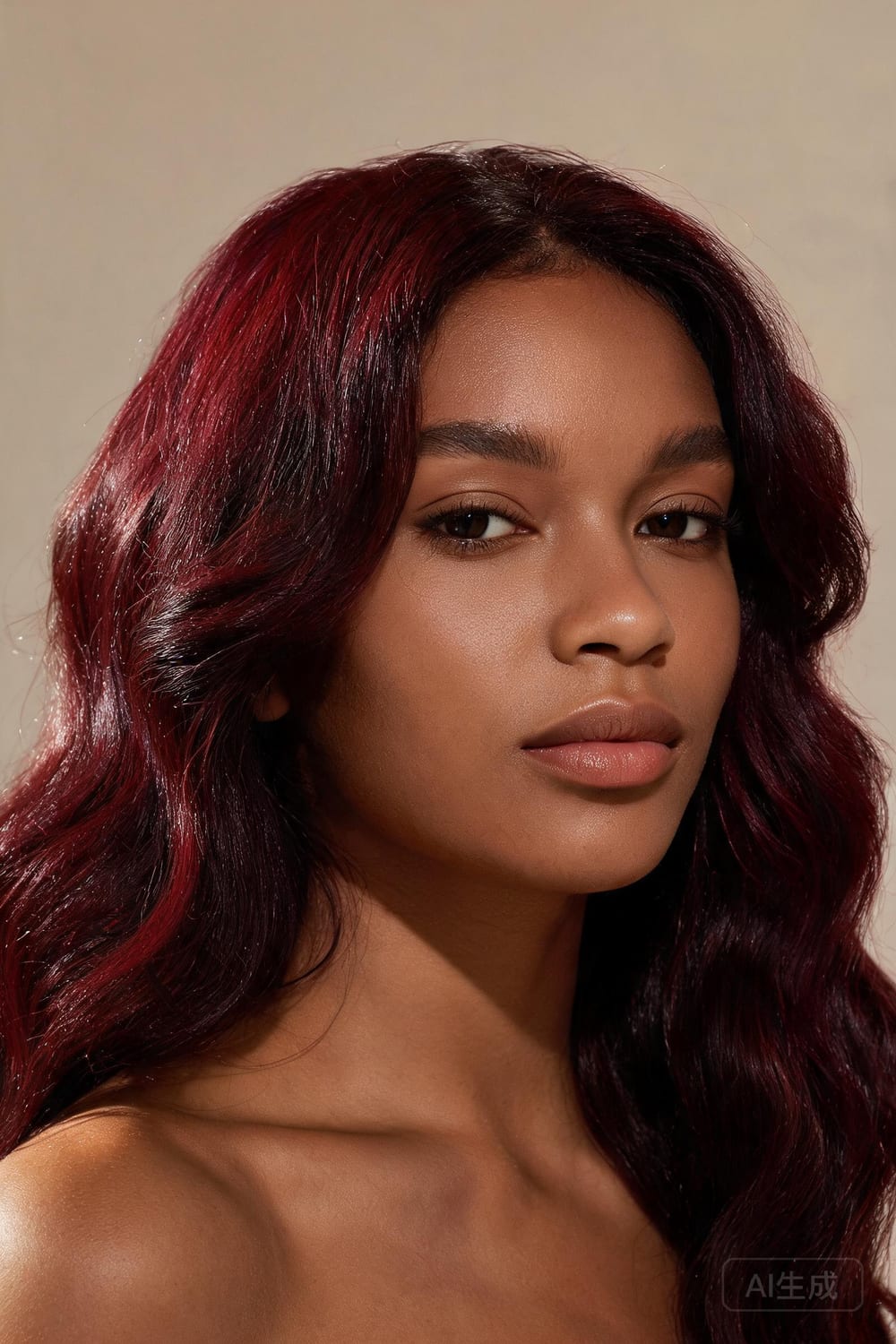

Burgundy vs Plum Brown at a glance
| Compare | Burgundy | Plum Brown |
|---|---|---|
| Tone | Deep wine red | Dark brown with violet |
| Depth | Level 4 | Level 3–4 |
| Best on | Medium and deep cool skin | Deep and cool skin |
| Maintenance | Medium—gloss every 4–6 weeks | Medium—gloss every 4–6 weeks |
| Fades to | Warm red-brown | Warm brown |
| Best for | A visible wine red | A subtle violet-brown |
Which one suits you?
Burgundy
It flatters cool, neutral and deep skin tones. On very warm skin, a burgundy with a little more brown is easier to wear than a blue-purple one.
Plum Brown
It tends to flatter cool and deep skin tones, and it is a good option for anyone who wants a dark shade with more interest than flat brown. Warm skin can wear it if the plum stays subtle.
What to ask your stylist
Burgundy: Ask for a level 4–5 burgundy with a red-violet reflector. If your hair is dark, ask for a visible wine flash rather than a full lift.
Plum Brown: Ask for a level 3–4 brown base with a plum reflector and a glossy finish. Ask for a strand test: on very dark hair the violet may only show at the edges.
Color results depend on your starting level, hair history and undertone. Book a strand test before a full application—it is the cheapest way to avoid an expensive correction.
Questions people ask
Which one is more red?
Burgundy. Plum brown keeps a brown base and only flashes violet.
Which one looks more natural?
Plum brown, especially indoors where it reads almost black-brown.
Which one suits warm skin?
Plum brown is usually easier because it is less red. Burgundy is cooler and more saturated.